
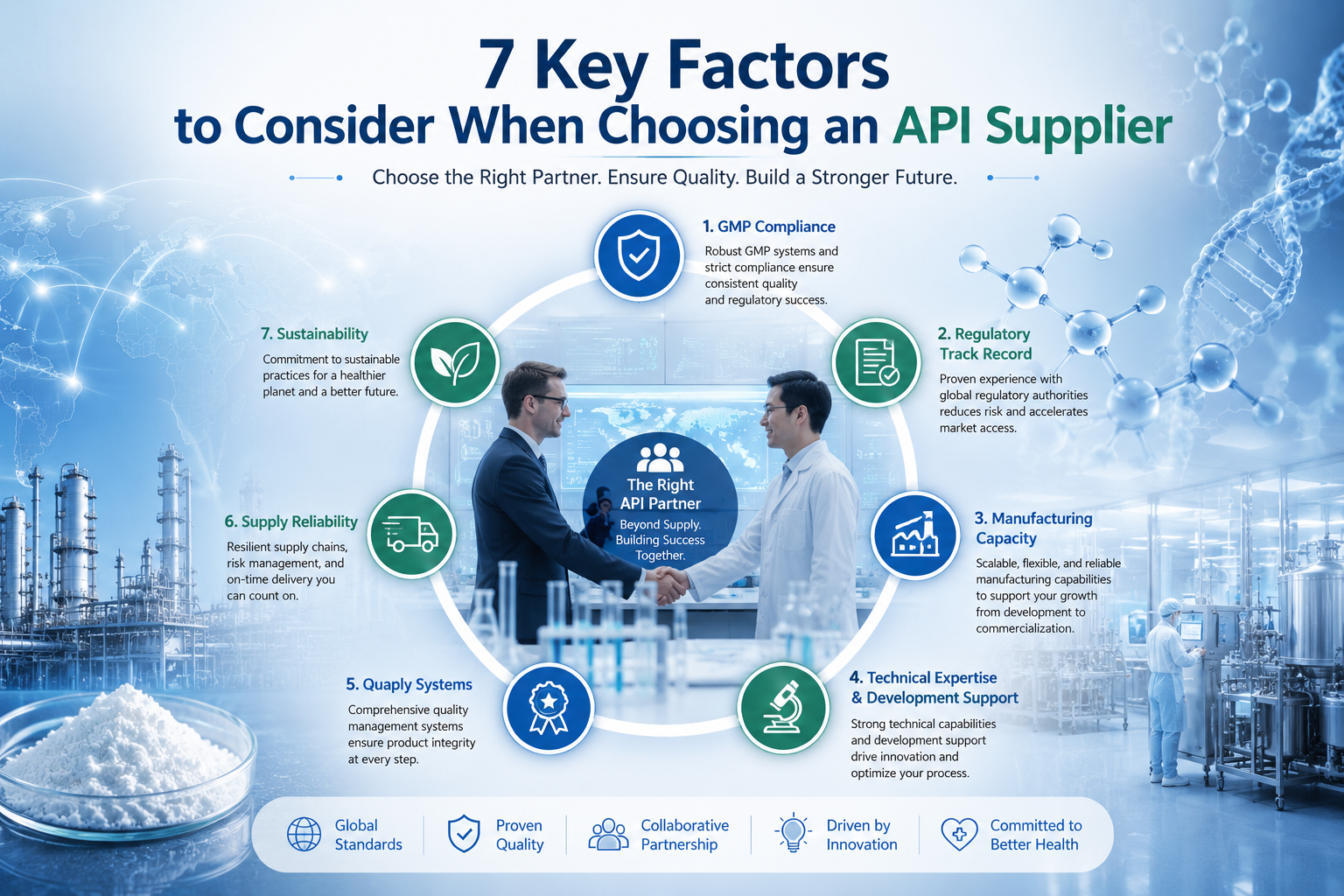
7 Key Factors to Consider When Choosing an API Supplier
A Strategic Guide for Pharmaceutical and Biotechnology CompaniesIn today's highly competitive pharmaceutical industry, selecting the right Active Pharmaceutical Ingredient (API) supplier is far more than a procurement decision—it's a strategic investment in product quality, regulatory success, and long-term business growth.An experienced API manufacturing partner can help accelerate development, reduce operational risks, and ensure uninterrupted supply throughout a product's lifecycle. Conversely, choosing the wrong supplier may lead to compliance issues, production delays, or costly disruptions.So, what should pharmaceutical and biotechnology companies look for when evaluating an API supplier? Here are seven critical factors.
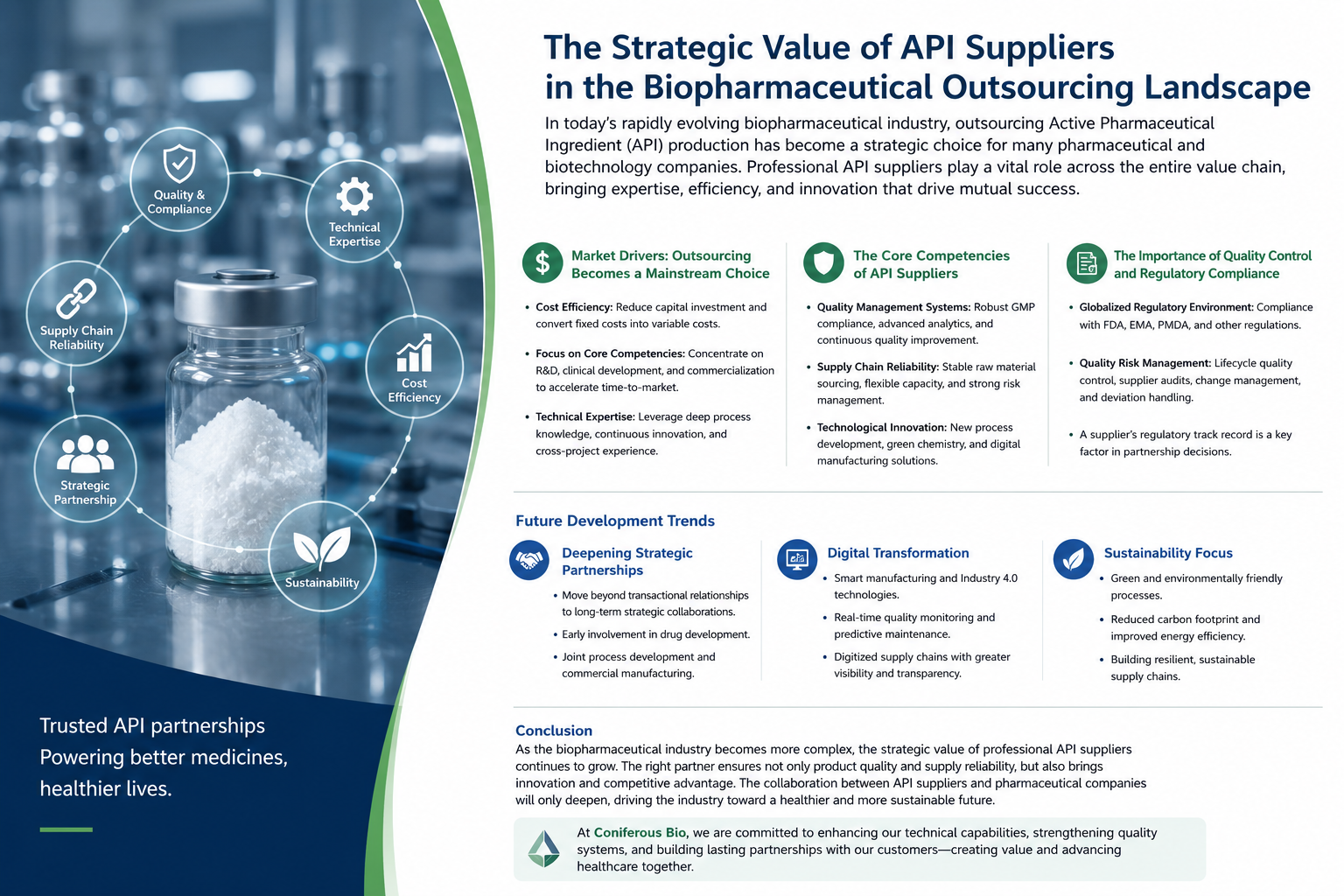
The Strategic Value of API Suppliers in the Biopharmaceutical Industry
Explore how professional API suppliers drive innovation, quality, compliance, and supply chain reliability in the modern biopharmaceutical outsourcing landscape.

Coniferous Officially Launches LinkedIn Presence
We are excited to announce the official launch of Coniferous on LinkedIn — a new step in strengthening our global presence and connecting more closely with partners, innovators, and industry professionals worldwide.
At Coniferous, we are committed to advancing biotechnology through high-quality peptide solutions, global collaboration, and integrated scientific excellence. Our LinkedIn platform will serve as a space where we share:
Industry insights and market trends
Advances in peptide APIs and biopharmaceutical manufacturing
Regulatory and quality perspectives
Company updates and global milestones Innovation stories shaping the future of healthcare
As we continue expanding our international network, we look forward to building meaningful connections with partners across the global biopharmaceutical ecosystem.Follow us on LinkedIn and join us as we explore the future of science without borders.
Biology Beyond Borders.
Peptide Solutions. Healthier Tomorrow.

Understanding Semaglutide:
A Science BriefingSemaglutide has become a global sensation in both metabolic health and weight management. To understand why it is considered a breakthrough, we need to look at the science behind the headlines.
1. What is Semaglutide?
Semaglutide is a GLP-1 Receptor Agonist (GLP-1 RA). It is a synthetic version of a hormone naturally produced in your gut called Glucagon-Like Peptide-1.In a healthy body, GLP-1 is released after eating to signal the brain that you are full and to tell the pancreas to release insulin. While natural GLP-1 degrades in minutes, Semaglutide is engineered to last much longer, typically requiring only a once-weekly injection.
2. How Does It Work?
(Mechanism of Action)Semaglutide works by targeting three main areas of the body:
The Brain: It acts on the hypothalamus (the appetite control center) to increase feelings of fullness and decrease hunger signals.
The Stomach:It slows down gastric emptying, meaning food stays in your stomach longer, extending the duration of satiety.
The Pancreas: It stimulates insulin secretion in a "glucose-dependent" manner—meaning it only works when blood sugar is high, which lowers the risk of hypoglycemia (dangerously low blood sugar).